


Comités de Ética
Introduction and background
- R for Replacement, meaning the substitution of vertebrates with any other method that uses non-sentient material. Non-sentient material is understood to include everything from computational models to in vitro assays using cell models, as well as studies involving less evolutionarily developed organisms such as microorganisms, plants, and certain invertebrates, which have a lower capacity to feel pain due, in some cases, to the absence of a nervous system and, in others, to the less complex development of their sensory systems.
- R for Reduction, by applying sequential strategies that minimize the number of vertebrates used, as well as implementing appropriate statistical design to ensure that only the number of animals necessary to obtain reliable and precise information is used, or by developing experimental strategies and approaches that allow more information to be obtained from the animals.
- R for Refinement, understood as any procedure that improves welfare and reduces the severity of harm caused to animals when replacement is not possible.
Objectives
The main objective of this Unit is to promote and enhance the application of the 3Rs in research carried out at ISCIII involving experimental animals listed in Annex I of Royal Decree 53/2013, as well as in the amendments included in the Royal Decree 1386/2018. This entails a review of the current situation regarding animal research and alternative methods within the Institute, as well as the promotion of new methodologies that are scientifically valid and ethically viable from the perspective of the 3Rs philosophy.
For this purpose, different activities have been identified:
a. Dissemination of information on the application of the 3Rs in ISCIII research
b. Education and Training
c. Promotion of the development and use of alternatives
d. Oversight and Ethical Considerations
Details of the proposal for the creation of the ISCIII 3Rs Unit can be found in the following document: 3Rs Unit Document
Composition
Coordinator
Óscar Zaragoza Hernández - National Centre for Microbiology (CNM)
Óscar Zaragoza Hernández is a Research Professor. His main research interest is the study of the pathogenic mechanisms of human fungal pathogens. Throughout his career, he has used different alternative models to investigate the virulence of these pathogens in relation to the host, such as invertebrates, zebrafish embryos, and organoids.
Secretary
Mónica Torres holds a PhD in Biology and is currently Head of the Zebrafish Embryo Laboratory in the Environmental Toxicology Area at the CNSA. Her main research interest is the use of this alternative model to study the health effects of emerging contaminants, especially nanoplastics and plasticizing substances, on neurodevelopment and endocrine disruption.She also participates in the European project PARC, which promotes the use of alternative methods in the field of toxicology. She is actively involved in science outreach, taking part in activities in schools and events aimed at the general public.
Members
Argelia Castaño – National Centre for Environmental Health (CNSA)
Research Professor. A specialist in environmental toxicology, a significant part of her research activity has focused on the development of alternative models to the use of experimental animals. She was a member of the Scientific Advisory Committee of the European Centre for the Validation of Alternative Methods (ESAC-ECVAM) of the European Commission (2002–2009). She served as President of REMA (Spanish Network for the Development of Alternative Methods to Animal Experimentation) from 2003 to 2011 and, since 2014, has been Honorary President.
Miguel Calero – Functional Unit for Research in Chronic Diseases (UFIEC)
Research Professor and Principal Investigator of a research group at CIBERNED. He is Head of the Spanish National Reference Laboratory for the molecular diagnosis of human transmissible spongiform encephalopathies, as well as National Expert for the ECDC. His research lines focus on neurodegenerative diseases, with particular emphasis on:
i) molecular diagnosis, ii) biomarkers and genetic susceptibility markers, and iii) the molecular basis of conformational disorders, including Alzheimer’s disease and prion diseases.
Maria José Buitrago – General Subdirection of Cellular Therapy and Regenerative Medicine (SGTCMR)
María José Buitrago is a Tenure Scientist and throughout her research career, she has focused on the development of new diagnostic methods for invasive fungal infections. She currently serves as Deputy Director of General Subdirection of Cellular Therapy and Regenerative Medicine at ISCIII, a position through which she holds the secretariat of committees such as the Bioethics Committee of Spain, the Guarantees Commission for the Donation and Use of Human Cells and Tissues, as well as internal committees related to ethics and scientific integrity.
Mercedes Domínguez - National Centre for Microbiology (CNM)
Mercedes Domínguez Rodríguez, Scientific Researcher. Throughout her career, she has combined basic research with technology transfer. One of the objectives of this combination has been the development of immunoassays that both researchers and companies can use as alternative methods, primarily aimed at the characterization and evaluation of the potency of antigens from infectious agents.
Isabel Jado - General Subdirection of Applied Services, Training and Research (SGSAFI)
Tenure scientist at Public Research Organizations (OPIs), her work has always been linked to Microbiology and Public Health, developing rapid diagnostic methods for the detection of emerging bacterial pathogens, as well as molecular characterization techniques for zoonotic agents belonging to the genera Francisella, Rickettsia, Bartonella, and Coxiella. She has been part of the Rapid Response team and has participated in various European projects focused on preparedness and response to highly infectious pathogens. Since 2024, she has held the position of Deputy Director of the General Subdirection of Applied Services, Training, and Research at the Carlos III Health Institute (ISCIII).
José E. Yuste Lobo – National Centre for Microbiology (CNM)
José Yuste is a Scientific Researcher and head of the Pneumococcal Reference Laboratory at CNM-ISCIII. In addition to leading the epidemiological surveillance of invasive pneumococcal disease, he participates in the molecular characterization of pneumococcal virulence, using respiratory epithelial cell lines, neutrophils, and macrophages, as well as organoids as alternative and innovative methods for studying its pathogenic mechanisms.
Antonio De la Vieja Escolar is a Scientific Researcher in the Functional Unit for Research in Chronic Diseases (UFIEC). Since 2008, he has led the Endocrine Tumors Unit, focusing on studies aimed at understanding the molecular mechanisms and biomarkers in endocrine disorders, as well as developing new therapeutic strategies against cancer using nanomaterials and advanced therapies. He also participates in the validation of alternative methods to animal experimentation within the European laboratory network EU-NETVAL and in the European project PARC, seeking new alternative methods in human toxicology.
Ignacio Pérez de Castro – Research Intitute on Rare Diseases (IIER), Department of Advanced Therapy Drug Development (DDMTA)
Scientific Researcher at the Institute for Research on Rare Diseases and the Department of Advanced Therapy Drug Development. An expert in biomedicine, he has studied various psychiatric, oncological, and muscular diseases. Since 2016, he has led the Gene Therapy Unit, where, using mouse and cell models as well as CRISPR-based therapies, he works on studying the underlying mechanisms of the development and progression of rare diseases and the application of advanced therapeutic strategies for their treatment..
Beatriz Martínez Delgado – Research Intitute on Rare Diseases (IIER)
Scientific Researcher at the Institute for Research on Rare Diseases (IIER). She heads the Molecular Genetics Unit and is responsible for the Genetic Diagnosis Laboratory and the National Rare Diseases Biobank (BioNER). Her research focuses on the genetic basis of rare diseases and the development of organoids as models to study disease mechanisms and test new therapeutic strategies. She participates in the ISCIII Biobanks and Biomodels Platform, promoting the development of new organoid models for biomedical research.
Sergio Casas Tintó- Research Intitute on Rare Diseases (IIER)
Scientific Researcher at the Institute for Research on Rare Diseases. He leads the Human Disease Models in Drosophila Unit. An expert in genetics and neuroscience, he has studied the mechanisms of human diseases and developed experimental models in Drosophila melanogaster that replicate genetically based human disorders. He has conducted genetic and compound screens as proof of concept for the initial development of therapies. He participates in the ISCIII Biobanks and Biomodels Platform, promoting the development of new Drosophila “avatar” models for personalized studies of undiagnosed patients.
Olga Calero Rueda – Functional Unit for Research in Chronic Diseases (UFIEC)
Researcher, co-responsible for the Spongiform Encephalopathies Unit at ISCIII. She coordinates and supervises activities related to the molecular diagnosis of prion diseases at the Spanish National Reference Laboratory for the molecular diagnosis of human transmissible spongiform encephalopathies. Her main line of research focuses on the study of molecular mechanisms associated with aging and neurodegenerative processes, including Alzheimer’s disease, Parkinson’s disease, and prion diseases, using the nematode Caenorhabditis elegans as an experimental model.
Alternative Methods at ISCIII
Caenorhabditis elegans

Drosophila melanogaster

Zebrafish embryos

The zebrafish embryo (Danio rerio) has become a strategic model within the 3Rs and New Alternative Methods (NAMs), as it represents a vertebrate system with high homology to human diseases (84%) that allows the study of biological processes and the assessment of toxic effects without resorting to conventional assays in adult animals. In toxicology, it enables the analysis of systemic toxicity, teratogenicity, and molecular and functional effects through high-throughput platforms and direct in vivo observation. In biomedicine, it facilitates the study of pathological mechanisms, gene interactions, and pharmacological responses in a whole organism. In oncology research, for example, it allows the xenotransplantation of fluorescent tumor cells and real-time monitoring of processes such as proliferation, angiogenesis, or metastasis; in microbiology, its transparency and functional innate immune system make it an ideal platform for studying infections, host-pathogen dynamics, and antimicrobial efficacy. Moreover, according to Royal Decree 53/2013, it is not considered a protected animal until reaching the independent feeding stage, which reinforces its value as an ethically and regulatorily accepted experimental alternative. Its use also contributes to experimental reduction and refinement, as it minimizes invasive procedures, allows longitudinal analyses in the same organism, and reduces biological stress, consolidating it as a bridge model between in vitro systems and traditional animal studies, promoting more predictive, efficient, and responsible research.
Cellular models and organoids
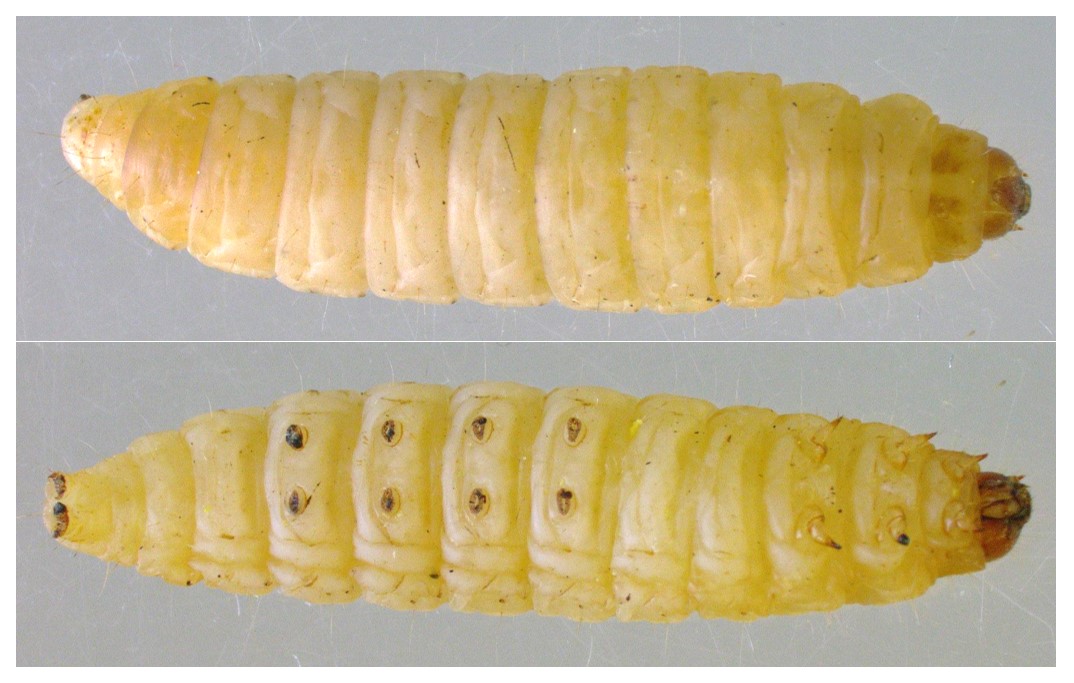
Lepidoptera
Texto de ejemplo
Texto de ejemplo
Texto de ejemplo
Texto de ejemplo
Relevant publications and projects
Training and Outreach
NC3Rs: Ofrece recursos de aprendizaje electrónico sobre diseño experimental, alojamiento y cría.
https://nc3rs.org.uk/3rs-resources/search?resource_type%5B0%5D=491
Labroots: Organiza eventos virtuales y seminarios web sobre modelos de enfermedades, toxicología, enriquecimientos y reproducibilidad en investigación.
https://www.labroots.com/webinars/all/filter/ondemand/page
Altertox Academy: Ofrece podcasts y seminarios web gratuitos sobre métodos alternativos y minimización del uso de animales en investigaciones.
https://academy.altertox.be/the-podcast/
Universidad Tecnológica de Eindhoven: Ofrece un curso gratuito de estadística en línea sobre diseño experimental para optimizar el número de animales y análisis de datos.
https://www.coursera.org/learn/statistical-inferences
3R Smart: Plataforma de información y formación para científicos y técnicos, financiada por el Ministerio Alemán de Educación e Investigación.
https://www.3r-smart.de/index.php?id=6834&L=2
NORECOPA: Sugiere recursos en línea para escolares y estudiantes, incluyendo alternativas virtuales a las disecciones de animales
https://norecopa.no/databases-guidelines/norina-database/resources-for-home-learning/
RAT: Ofrece módulos de aprendizaje electrónico para investigadores, alineados con los módulos de formación de la UE.
https://researchanimaltraining.com/
ASCCT: Realiza seminarios web sobre metodologías de prueba sin animales, accesibles sin costo.
https://www.ascctox.org/webinar-archive
Otros enlaces de interés:
https://www.youtube.com/watch?v=jsP03s7ZH3Y
https://www.youtube.com/watch?v=2XEu_5aF1qk&t=522s
Animal-Free Science Advocacy: Podcast y otros recursos sobre el uso de alternativas a la experimentación animal
https://animalfreescienceadvocacy.org.au/resources/podcast/
External links
Buscadores/bases de datos/inventarios
http://buscaalternativas.com - Busqueda de Alternativas en / y a la Experimentación Animal en Investigación, desarrollo y docencia
www.nat-database.org - Base de datos NAT (Non Animal Technologies): Buscador de métodos alternativos
Modelos avanzados sin animales en investigación biomédica JRC
EDA (Experimental Design Assistant)
https://www.altex.org/index.php/altex/about - Revista ALTEX – publica artículos sobre 3R y NAMs
NORINA - base de datos con información sobre aproximadamente 3.000 recursos audiovisuales que pueden utilizarse como alternativas o complementos al uso de animales.
Listado del JRC de NAMs para el estudio de enfermedades respiratorias
Legislación de protección y experimentación animal: Información sobre legislación respecto a la protección y la experimentación animal
Redes/sociedades/Centros/organizaciones
REMA: Red Española para el desarrollo de Métodos Alternativos
SECAL: Sociedad Española de Ciencias del Animal de Laboratorio
ECVAM: Centro Europeo Validación Métodos Alternativos
EPAA: European Partnership for Alternative Approaches to Animal Testing
The 3Hs Initiative (Housing, Handling, Habituation)
RCEUE: Red de Comités de Ética de Universidades Españolas
EU-NETVAL (European Union Network of Laboratories for the Validation of Alternative Methods / Red de laboratorios Europeos para la Validación de métodos alternativos a la experimentación animal).
NCRS: Organización científica para el reemplazo de animales de experimentación
Altweb (CAAT) Centro para el desarrollo de alternativas al uso de animales en experimentación
AFSA: Colaboración para la Evaluación de Seguridad sin Animales (AFSA)
PETA Science Consortium International: Promueve uso de NAMs en el área de toxicología
https://aopwiki.org AOP-Wiki (Collaborative Adverse Outcome Pathway Wiki / Web colaborativa sobre Vías que dan lugar a Efectos Adversos) Agrupa conocimiento de literatura científica, bases de datos, etc… para establecer rutas que van desde que se produce una perturbación biológica hasta el efecto adverso específico final en un proceso biológico.